
- US law bars stablecoin issuers from paying interest to holders. It does not clearly stop exchanges and affiliated firms handing out “rewards”, and banks want that gap shut.
- Banks lend using deposits they pay almost nothing for. A dollar passing on roughly 4% competes directly with that funding, which is why the fight is this fierce.
- In the UK the question is settled by a different rulebook: the FCA and the Bank of England are shaping sterling stablecoins as payment tools, not savings products.
Buried in the stablecoin rulebooks on both sides of the Atlantic is a question worth real money to anyone holding one: whether a digital dollar is allowed to pay you anything for sitting still. Banks would strongly prefer that it doesn’t, and their argument is gaining ground.
This decides whether the dollar or pound token in your wallet is a way of moving money or a way of earning on it. If yield is allowed, holding one becomes a genuine alternative to a savings account. If it’s banned, stablecoins stay plumbing, and the interest earned on the money backing them stays with the issuer.
It also tells you something useful about how financial rules get made. The strongest arguments against paying you that yield are being made by the institutions that currently keep it.
What a stablecoin actually is
Start from nothing, because the mechanics matter here more than usual.
A stablecoin is a digital token designed to be worth exactly one unit of ordinary money, almost always one US dollar. Unlike bitcoin, it isn’t meant to move in price at all. One token, one dollar, today and next month.
It holds that value because someone is holding real assets behind it. You give the issuer a dollar, the issuer gives you a token, and it puts your dollar somewhere safe. Hand the token back and you get your dollar returned. The big issuers keep most of that backing in short-term US government debt, known as Treasury bills: loans to the US government that get repaid within months and are treated as about the safest thing you can own.
The whole industry now sits somewhere in the hundreds of billions of dollars, and it’s mostly used for exactly what it looks like. Moving money between exchanges, settling trades, and sending dollars to people who can’t easily get a dollar bank account.
Where the yield comes from
Here’s the bit that started the argument.
Those Treasury bills pay interest. With US short-term rates around 4%, an issuer holding $100bn of backing assets is earning something in the region of $4bn a year on money that customers handed over. The customers, under current arrangements, generally get nothing.
That’s not a scandal. It’s how the business works and it’s disclosed. But once you understand it, the obvious question follows: why shouldn’t the interest earned on your dollar come back to you?
Coinbase’s Brian Armstrong has made that case publicly and repeatedly, arguing that customers should be able to receive the return generated by their own money. He has a commercial interest in the answer, since exchanges distributing stablecoins would be the ones handing the yield out and taking a cut. That doesn’t make the argument wrong. It’s just worth knowing who’s making it.
Why banks treat this as existential
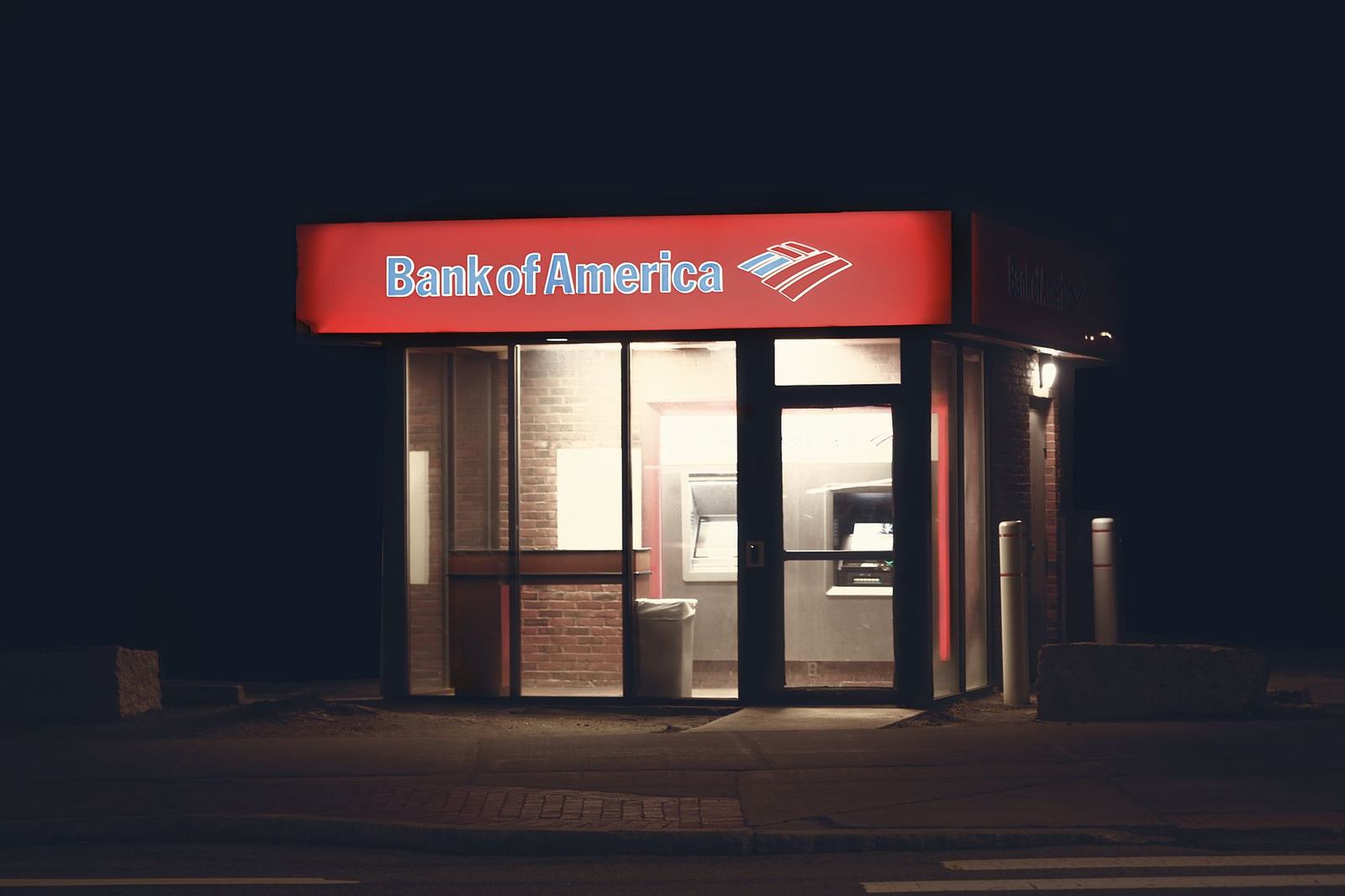
Now the part almost nobody explains, and the reason this dispute won’t die.
A bank does not lend out its own money. It lends out yours. Deposits are the raw material of bank lending: mortgages, business loans, overdrafts, all of it is funded largely by the current accounts and savings accounts sitting on the bank’s books.
The crucial detail is what those deposits cost. Ordinary current accounts pay nothing, and many savings accounts pay a fraction of a percent. The bank then lends that money out at several percent. The gap between the two is where a very large share of banking profit comes from.
So a token paying close to 4% on demand, redeemable instantly, isn’t competing with crypto. It’s competing with the cheapest funding in the financial system. Every dollar that moves from a low-paying deposit into a yield-bearing stablecoin is a dollar the bank has to replace with something more expensive.
US bank trade bodies have published estimates of potential deposit flight running into the trillions of dollars. Treat those numbers as advocacy rather than forecast, because the institutions producing them are the ones with money at stake. But the mechanism they describe is real, and it’s why the lobbying is relentless.
What the US rules bar, and what they don’t
The GENIUS Act, signed in 2025, set the first federal framework for dollar stablecoins. On yield it is direct: a permitted payment stablecoin issuer cannot pay interest or yield to holders simply for holding the token.
What the law does not clearly do is stop everyone else. If an exchange, a broker, or a company affiliated with an issuer chooses to pay customers a reward out of its own revenue, that sits outside the issuer prohibition as written. Banks call that a loophole. The crypto industry calls it a separate business paying its own customers.
This is the whole fight, and it has now split into two arguments. Whether the existing gap gets closed by regulators reading the law strictly, and whether Congress closes it explicitly in follow-up legislation.
Neither is moving quickly. The Clarity Act, the broader market-structure bill that was expected to carry the next round of decisions, has stalled. Hopes that the SEC might act independently if legislation stalled have also cooled, with an expected meeting on the subject not happening. In practice that means the ambiguity stays in place for now, which suits whoever is currently operating inside it.
The stability argument, taken seriously
It would be easy to dismiss the bank case as self-interest with a public-policy costume. It’s worth more than that.
Deposits are insured, supervised, and sit inside a system with a central bank behind it. Stablecoin backing assets are held by a private company. If a lot of money left the first for the second, and then a large issuer had a bad week, the money that funds mortgages and small business loans would be sitting somewhere with a much thinner safety net.
That’s a genuine concern about how a financial system is plumbed. It’s also, conveniently, an argument for keeping the interest where it currently sits. Both things are true at once, and readers should hold both.
The UK answer is being written separately
None of the above governs a sterling stablecoin. If you’re holding one issued under UK rules, a different rulebook decides your yield question.
The FCA has been consulting on how sterling stablecoins are issued and held, and its proposals treat them as payment instruments: backing assets held safely, redemption at face value, clear disclosure of who holds what. That framing matters more than any single clause. A payment instrument is not designed to pay you a return, and the direction of travel points away from yield rather than towards it.
The Bank of England handles anything large enough to matter systemically, and it has gone further in one respect. It has floated caps on how much of a systemic stablecoin any single person could hold, with figures around £20,000 discussed publicly, explicitly to limit the amount of money that could drain out of bank deposits. That is the deposit-funding concern written directly into a proposed rule, before the products have arrived at scale.
Both regimes are still being finalised, so the detail can shift. The shape is already clear enough.
What to watch
Whether any US rulemaking or amendment explicitly extends the interest ban to exchanges and affiliates. That single change would decide whether a yield-bearing dollar token is a mainstream product or a closed door.
In the UK, watch the FCA’s final rules and whether the Bank of England’s holding caps survive into the finished regime. If they do, the answer to “can my stablecoin pay me?” is effectively no for British holders regardless of what Washington concludes.
And whenever you read the stability argument, check who is making it. The case may be sound, but the party making it is also the party currently keeping the 4%.