
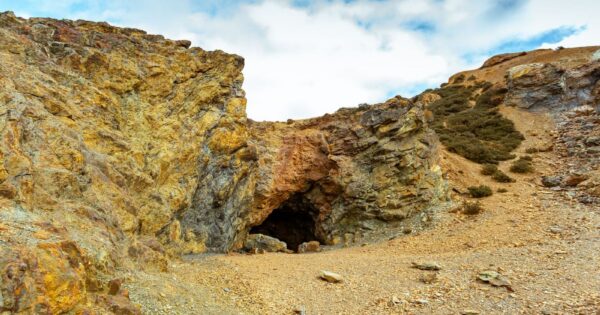
Cardano’s treasury has been asked for $5m to buy tokenised copper
Toto Finance wants 22 million ADA for tokenised copper. Per CoinDesk, the metal must pass its record high before holders break even.
Fetching the latest price…
Loading price history…
Price data from CoinGecko. Charts by TradingView.
Type in either box. Uses the live mid-market rate above, which is not the rate you would get after an exchange’s spread and fees.
Toto Finance wants 22 million ADA for tokenised copper. Per CoinDesk, the metal must pass its record high before holders break even.

Cardano's new standard lets token issuers freeze and seize balances. It covers assets issued under it, not ADA itself or coins you already hold.

Splash says a reserve check would have stopped the drain of 2.4m ADA. It would not return it, and Optim has announced no redemption for OADA holders.

Cardano's IOG says to stay off its YouTube channel after it began streaming an apparently AI-altered video of Charles Hoskinson promising doubled returns.

Cardano's committee renewal crossed both thresholds by 0.18 points in a 1 September snapshot, but stake that never voted counted against it.

Four of the seven seats on Cardano's Constitutional Committee expire in the first days of September, and the replacements still need an on-chain vote to pass. Here's what actually stops if it doesn't, and what carries on regardless.
Cardano is the blockchain that decided to move slowly on purpose. Founded by Charles Hoskinson, one of Ethereum's original co-founders, it took the view that systems intended to hold billions should be built like aircraft, not like apps: academic research first, formal review of that research, then code. Its core designs have been through peer review of the kind normally reserved for university science, which is either its greatest strength or the reason it keeps arriving after the party, depending on who you ask.
Technically it runs on proof of stake and did so years before Ethereum switched: ADA holders stake their coins to validators to secure the network and share the rewards. Cardano's version has a feature holders notice immediately: staked ADA is never locked. You delegate from your own wallet, keep full control, and can spend or move the coins at any time. The name honours Ada Lovelace, the nineteenth-century mathematician often described as the first programmer, which tells you something about how the project sees itself.
The argument around Cardano never changes, only the examples. Critics point at rivals shipping faster and hosting more activity, and call it a research project with a token attached. Admirers point at a decade of uptime, a methodical record, and a governance experiment that in 2024 formally handed control of upgrades and the treasury to votes by ADA holders. Both sides are describing the same choice from different ends. We are not going to referee it; we can tell you exactly how the thing works and what the rules are here.
ADA is a mainstream listing: every major FCA-registered exchange in the UK carries it, and buying it works like buying any other large coin, pounds in on a platform that has checked your identity. The registration is an anti-money-laundering measure and nothing more. It does not vouch for the exchange's solvency or for ADA as an investment, and your bank may still eye transfers to crypto platforms with suspicion.
None. The Financial Services Compensation Scheme protects up to £85,000 in a failed UK bank and does not touch crypto, wherever and however held. An exchange failure makes you an unsecured creditor; a lost wallet key has no helpline at all. Cardano's engineering rigour, whatever you make of it, protects the network, not your access to your own coins. The standing rule applies: only commit money you could see go to zero.
HMRC treats ADA as an asset: sell, swap or spend it at a profit and Capital Gains Tax can apply above your annual allowance, which is £3,000 in recent tax years. Staking rewards are generally income at the moment you receive them, and because Cardano pays rewards roughly every five days, that is a lot of small receipts to account for across a year; the coins can then produce a separate capital gain when sold. Software or an accountant earns its keep here, and HMRC's live guidance is the reference.
UK figures last checked August 2026. Tax allowances and protection limits change; check the linked HMRC and FSCS guidance for the current position.
Nothing on this page is financial advice. Crypto is high risk: prices can go to zero, and if something goes wrong you are unlikely to be protected.
The protocols underneath Cardano were published as academic papers and examined by outside researchers before being built, the process universities use to check science. It genuinely reduces one class of risk: design flaws that only surface under attack. It does nothing about the other risks that matter to a holder, from market collapse to your exchange failing, and it is not a promise the network will win. It is quality control, not a guarantee.
Because features that rivals shipped quickly arrived on Cardano years later, smart contracts most famously. The project answers that it was doing the checking others skipped, and that it has avoided the exploit disasters that have repeatedly hit faster-moving chains. Both statements are true. Whether careful-and-late beats fast-and-patched is the entire Cardano debate in one sentence, and it has not been settled.
You delegate from your own wallet to a stake pool, the pool helps run the network, and rewards arrive automatically every few days, typically a low single-digit percentage a year. Uniquely among the big chains, nothing is ever locked: delegated ADA stays in your wallet, spendable at any moment, and there is no penalty that can take your coins. The main risks are picking a poorly run pool, which just lowers rewards, and the tax paperwork.
The supply is capped at 45 billion, and most of it already circulates. New ADA still trickles out as staking rewards from a reserve inside that cap, so the total edges toward the ceiling rather than past it. Like bitcoin, and unlike Ethereum or Solana, the design promises a hard maximum, though with 45 billion units each one is priced accordingly: whole ADA cost pennies to pounds, not thousands.
A co-founder of Ethereum who left early after a dispute over its direction and started Cardano in 2015 with a more formal, research-led philosophy. He remains its most visible advocate: prolific, combative online, and inseparable from the project's public image. As always, we would separate the founder from the asset. Charisma and livestreams are not fundamentals, for Cardano or for anything else on this site.
Cardano switched on what it calls the Voltaire era: upgrades and spending from its treasury now require on-chain votes involving ADA holders and their delegated representatives, under a written constitution. It makes Cardano one of the furthest experiments in handing a blockchain to its users. Whether token voting produces good decisions is an open question everywhere it has been tried, but the mechanism is real and running.
Same broad job, different temperament. Both run smart contracts and secure themselves by staking. Ethereum ships iteratively and hosts vastly more activity and money; Cardano researches first, ships later, caps its supply, and never locks staked coins. Ethereum's accounting model also differs from Cardano's under the bonnet, which mostly matters to developers. For a holder, the practical difference is ecosystem size against design conservatism.
A whole ADA usually costs less than a coffee, so the question runs in reverse: people hold thousands. It divides into a million units apiece (called lovelaces) in any case. Ignore the small per-coin price as a signal of cheapness: with 45 billion of them, a low unit price is arithmetic, not a bargain.
No. The £85,000 FSCS scheme covers bank deposits and does not extend to crypto on any platform. If your exchange collapses you join the creditor queue, and staking through an exchange adds a layer: you are trusting them with the delegation too. Delegating from your own wallet avoids that particular middleman, at the price of guarding your own keys.
Usage against promise: stablecoin volume, apps with real users, and whether activity grows now the governance machinery is live, because a decade of careful engineering ultimately has to cash out as things people do on the chain. Watch treasury votes too, since how a community spends shared money tells you more about its health than any roadmap. Price targets, as ever, tell you about the person making them.
Our guide compares the FCA-registered platforms on what they verifiably charge, which ones let your coins leave, and what protection you do and do not get.
Where to buy, hold and store crypto →No adverts, no sponsored posts, no paywall. The site is paid for by readers. Anything helps, and nothing here buys you anything the site does not already give everyone.
Donate by card or PayPalPrefer crypto? Bitcoin, Ethereum and USDC addresses
Subscribers get the daily and Saturday emails, and the plain-English reason behind any big coin move on its page. Follow up to three coins and we will also email you the moment one has a real incident. No password: we send a one-tap link. The news stays free for everyone either way.
New here? This subscribes you. Already subscribed? The same box signs you in — we send a one-tap link either way.