
- Nasdaq has agreed to invest $100m in Payward, the company behind the Kraken exchange, through its venture arm. Both firms have now confirmed it themselves, and both describe a deal that has been agreed rather than completed.
- It extends an existing partnership on shares carrying voting rights, now named Nasdaq Equity , and adds a second agreement to install Nasdaq’s market-surveillance technology across Payward’s trading venues.
- Neither company has disclosed a valuation, an ownership percentage or any governance rights. The $21bn figure comes from CoinDesk’s reporting and is not confirmed by the firms.
Nasdaq has agreed to invest $100m in the company that owns Kraken. The two firms have now said so themselves, and what they describe is a deal agreed rather than closed. The reported valuation is $21bn. Five months ago, another investor’s terms implied a figure nearer $13.3bn.
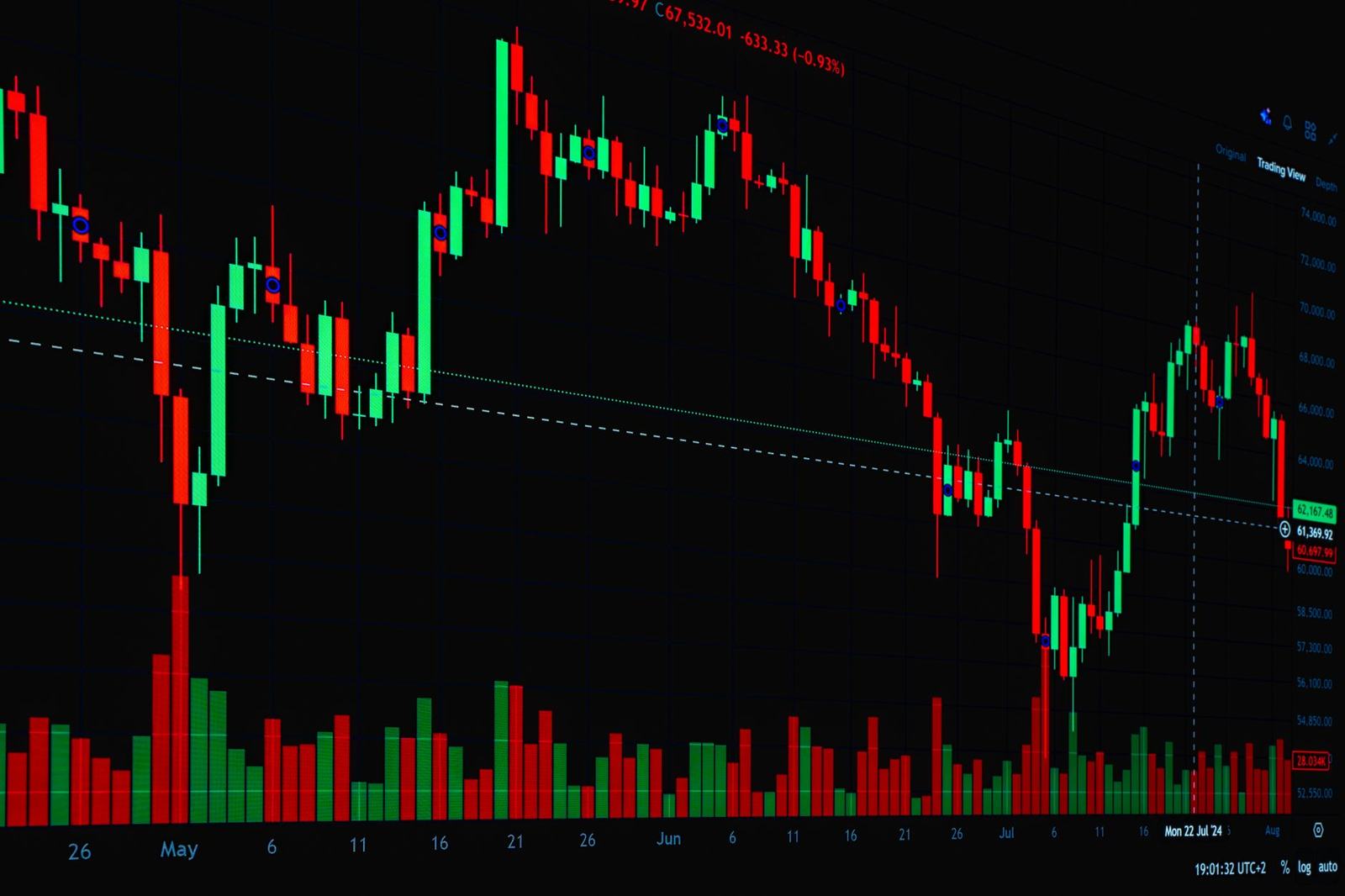
One of the largest stock exchange operators in the world has agreed to buy a slice of a crypto exchange, at a price reported to be roughly 58% above what that company was worth on paper in April. It has done so in a week when bitcoin is down more than 5%, which sits awkwardly with the idea that serious institutional money is edging away from the sector.
The other half of the story is slower but larger. If tokenised shares with voting rights ever reach ordinary customers, the place you buy a stake in a listed company could end up being a crypto exchange rather than a broker. Nothing announced so far gets a UK reader there, and the distance between a stated plan and a product you can actually use is where most of these announcements end.
What Nasdaq has bought, and what it hasn’t
$100m against a $21bn valuation works out at slightly under half a percent of the company. This is a venture-style minority stake in Kraken‘s parent, made through Nasdaq Ventures, and Nasdaq does not take control of anything by writing that cheque. Our Kraken review covers what the exchange currently offers UK customers, which this deal does not change.
The companies’ own announcement, reported by CryptoSlate, calls it an agreement to invest and carries no closing date, no valuation, no ownership percentage and no governance rights for Nasdaq. That leaves several ordinary questions open: whether new shares are being issued or existing ones bought, whether Nasdaq gets a board seat, and what rights attach to the stock. Until it closes, it is a commitment rather than a completed transaction.
It helps to remember that Nasdaq is more than the exchange people picture. A large part of its business is selling infrastructure to other venues and to regulators, including market surveillance systems: software that monitors order flow for the patterns associated with manipulation and insider dealing. Any venue seeking a regulator’s approval for a new regulated product has to demonstrate that kind of monitoring, and in the United States it generally has to show surveillance-sharing arrangements with established markets as well. That was our reading of why an operator like Nasdaq is a useful partner to a crypto exchange with public-market ambitions, and the announcement has since put it beyond inference: Payward has agreed to deploy Nasdaq’s surveillance tools across its crypto, equities, tokenised equities, futures and options venues. The money and the plumbing arrived in the same press release.
The valuation is negotiated, not measured
When Deutsche Boerse’s investment in the same company was reported in April, the terms implied a value of about $13.3bn. The new figure is roughly 58% higher, arrived at in five months.
That number is worth treating carefully, and more so now that the companies have published an announcement without it. The $21bn rests on CoinDesk’s reporting alone. A private valuation is in any case the outcome of one negotiation with one buyer, not a price set by thousands of people trading in public. Late-stage rounds routinely carry preferences and protections that guarantee the new investor gets paid out first in a sale, which can make the headline valuation flattering to everyone else on the register. A strategic investor buying commercial access may also pay more than a purely financial one would.
So the direction tells you something and the precision tells you less. What it does not support is the reading that big traditional finance has lost interest while prices soften.
Voting-enabled tokenised equities, unpacked
A tokenised equity is a token on a that tracks a real share. In most existing designs an intermediary holds the actual stock and issues tokens against it, so you hold the token and somebody else holds the share. Those products typically pass on price exposure and little else. Voting is the part usually dropped, because collecting instructions from token holders and passing them to a company’s registrar is administrative work with no obvious revenue attached.
“Voting-enabled” is presented as the fix for that. What the phrase does not automatically mean is that you appear on the share register, that you have a direct shareholder’s protections if the issuer of the token fails, or that the product will be available where you live. Tokenised stock has largely been offered to customers outside the US, UK and EU retail markets for precisely those regulatory reasons.
The product now has a name, Nasdaq Equity Tokens, and the two firms say they are still building the operational and commercial systems behind it. There is no launch date, no named jurisdiction and no regulatory approval attached to it. At this stage it remains an intention with a brand on it.
The London end of it
Payward is the same company that announced plans with the London Stock Exchange last month to tokenise 100 London-listed stocks, which we covered at the time in our news archive, and the same company named as a possible US route to market for Hyperliquid’s perpetual futures. Both of those remain plans rather than live products.
Taken together, the pattern is a crypto exchange collecting regulated distribution partners in several jurisdictions at once. For a UK reader that means nothing you can buy today: offering tokenised shares to UK retail customers would need the appropriate FCA permissions, and nobody has said that any of these products will be available here.
What to watch
Whether the investment closes, and on what terms. An agreement to invest is not money in the bank, and the announcement gives no date. Nasdaq is a listed company, so a $100m commitment of this size should eventually surface in its own reporting, and that is the document that confirms or corrects the $21bn, because a number quoted in a wire story is not audited and a filing is.
After that, watch for a date, a named regulator and a named market attached to Nasdaq Equity Tokens, and for signs that the surveillance technology has actually gone live across Payward’s venues rather than been agreed to. And watch whether Payward raises again at a higher number. One repricing is a negotiation. Two in a falling market would be worth explaining.