
- America’s derivatives regulator has cleared perpetual futures on individual company shares, a contract that came out of crypto and carries no expiry date.
- A funding payment charged every few hours, rather than a settlement date, is what keeps the contract’s price close to the share it tracks.
- Most UK retail investors will read about this rather than use it. The FCA’s ban on selling crypto derivatives to retail consumers still stands, and access to US futures venues is a broker question.
Perpetual futures are among the most heavily traded instruments in crypto, and almost nobody outside crypto has heard of them. America’s derivatives regulator has now cleared the same contract for ordinary company shares. For UK readers, the catch arrives early.
A contract with no end date sounds like convenience, and the convenience is paid for by a fee charged every few hours, indefinitely. Add borrowed money, which is how these things are normally traded, and being right about the direction of a share stops being enough on its own. You have to be right before the running costs and the margin maths catch up with you.
The regulatory wrapper around this product is changing. The arithmetic inside it is not. And for a UK retail investor, the nearest thing already on sale here is the contract for difference, which has the same shape and a long record of costing people money.
A futures contract, before crypto got hold of it
A future is an agreement made today to buy or sell something at a fixed price on a fixed date. Farmers used them to lock in a price for a harvest months away. Airlines use them for fuel. Traders use them to bet on a price without owning the thing itself.
The date is the defining feature. On expiry the contract settles and stops existing. That deadline is also what keeps the price honest: as expiry approaches, the price of the contract converges on the real price of the underlying asset, because on the day they have to be the same thing.
For anyone who wants continuous exposure, the date is an irritation. You close the expiring contract and open the next one, and you pay a little spread every time you do it. That repeated housekeeping is called rolling, and it is the problem perpetuals were built to remove.
What a perpetual does instead
It takes the date away. The contract simply continues until you close it.
The idea is older than crypto. The economist Robert Shiller proposed perpetual claims in the early 1990s as a way of creating futures markets for things that never settle, like property or national income. Crypto built the working version: the perpetual swap launched by BitMEX in 2016, applied to bitcoin and copied by almost every derivatives venue since. Perpetuals have accounted for the bulk of crypto trading volume for years.
Removing expiry solves the rolling problem and creates a new one. With no settlement date, nothing forces the contract price back towards the price of the asset. Something else has to do that job.
The funding rate does the work
At set intervals, every eight hours on most crypto venues, the exchange compares the perpetual’s price with the price of the underlying asset. If the contract is trading above, the people holding long positions pay a small percentage to the people holding short positions. If it is trading below, the shorts pay the longs. The money moves between traders rather than to the venue.
That payment is the tether. When a crowd piles into one side, holding that side starts to cost money every few hours, and taking the unpopular side starts to earn it. The gap closes because it is expensive to keep open.
Each individual payment looks trivial. A funding rate of 0.01% charged three times a day is roughly 11% a year, and in excitable markets the rate goes multiples higher. The rate for any contract is published before you trade it. What nobody can tell you is what it will be next week.
Leverage, and why liquidation is routine
Perpetuals are margin products. You put down a deposit and control a much larger position. At twenty times leverage, a 5% move against you wipes out the whole deposit, and the venue closes the position automatically before it can go negative. That automatic close is a , and at high leverage it is the ordinary outcome of a normal day’s volatility rather than a freak event.
Funding payments come out of the same margin. A position can therefore be closed out by the cost of holding it rather than by the price moving at all, which is the part that catches people who think of the contract as simply a long-term bet on a share.
Crypto venues have offered 50 and 100 times leverage. What any US-regulated version permits will be set in each exchange’s rulebook and margin requirements, which have not been published in the material available on this story.
What the regulator has actually done
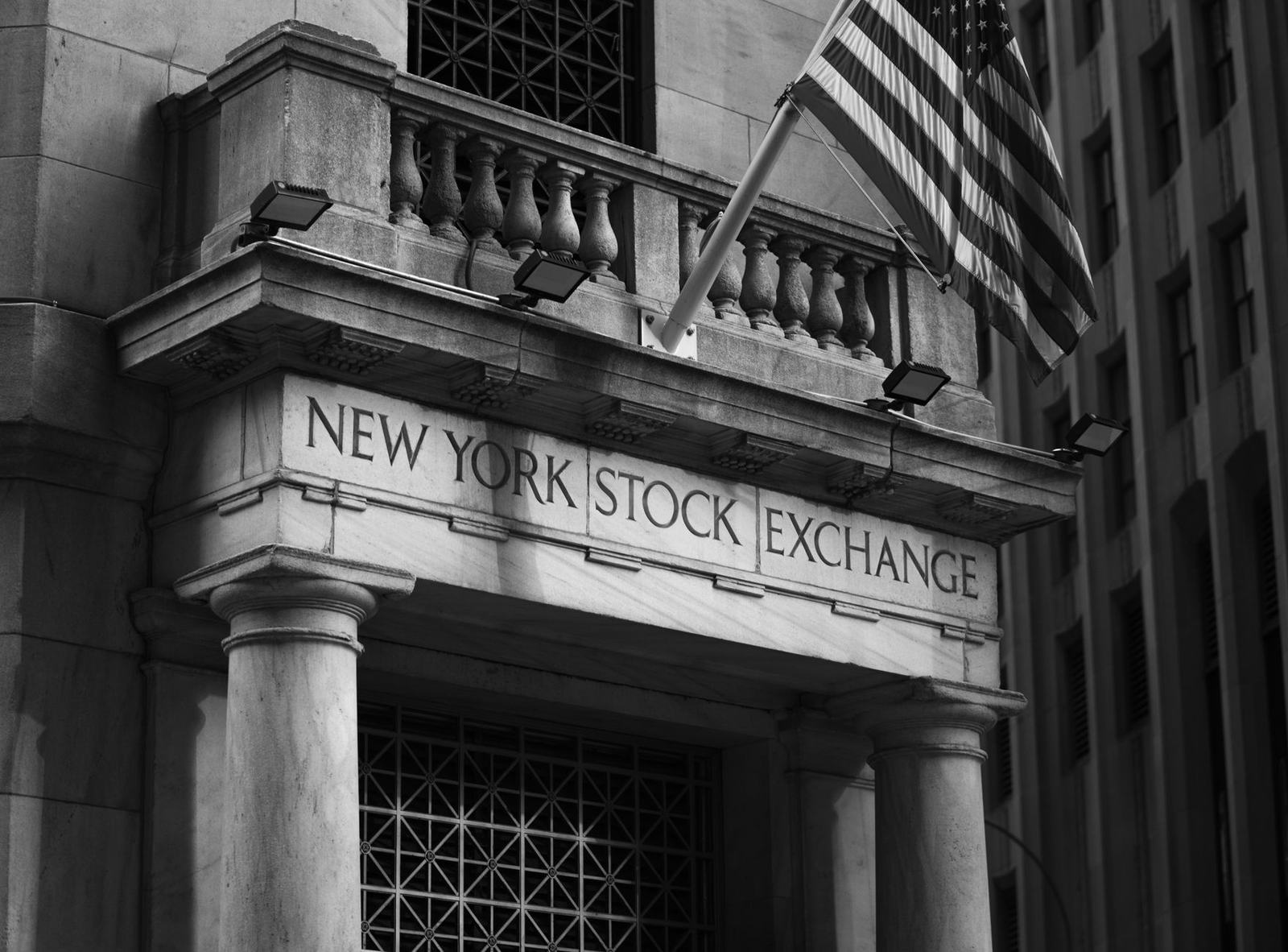
CoinDesk reported on 3 November 2026 that the Commodity Futures Trading Commission has cleared perpetual futures on stocks, bringing the crypto trading model to US equity markets. Its chair, Michael Selig, said the move gives American traders a regulated alternative to “offshore, and often unregulated, venues”. We could not locate the underlying CFTC document, so everything beyond that quoted line rests on a single outlet’s account.
Clearance of a product type is not the same as a launch, and it is not an endorsement of any particular venue or an indication that these contracts suit anybody. US exchanges still have to list individual contracts under their own rules, and nothing in this makes a leveraged perpetual a sensible holding for a long-term investor.
The argument over who is in charge
According to the same reporting, a legal challenge argues that perpetual futures on individual shares are security futures, which would put them under the Securities and Exchange Commission rather than the CFTC.
That argument has history behind it. Single-stock futures were legalised in the United States by the Commodity Futures Modernization Act of 2000 and placed under joint SEC and CFTC oversight precisely because nobody could agree whose territory they were. A contract on one company’s shares looks like a security to one agency and like a derivative to the other, and the dispute is older than crypto by a couple of decades.
The outcome decides practical things: which rulebook sets margin, who is allowed to sell these contracts and to whom, and what disclosure a retail customer gets before trading one.
Where this leaves a UK reader
The Financial Conduct Authority banned the sale of crypto derivatives and crypto exchange-traded notes to retail consumers from January 2021. It has since eased the ETN side. The derivatives half still stands, which means crypto perpetuals remain off limits from a UK-regulated firm whatever the CFTC decides about American equity markets.
Perpetuals on shares are a different legal animal, being an equity derivative rather than a crypto one. Access is then a question of whether a UK broker offers US futures to retail clients, and most do not.
British investors already have the family resemblance on sale, though. A rolling contract for difference or a spread bet on a share is leveraged, has no expiry, and charges a daily financing cost for keeping the position open. Different plumbing, same shape. FCA rules cap retail leverage on individual shares at five to one and require firms to display the proportion of retail accounts that lose money, which is routinely a clear majority. That disclosure is the closest thing to a controlled study of how these products treat ordinary traders, and it is worth reading before any imported version arrives. Tax treatment follows the wrapper rather than the asset, which trips people up in crypto too, and our UK crypto tax guide covers the HMRC side of that.
What to watch
Whether the jurisdictional challenge gets anywhere, because that determines which regulator writes the rules these contracts live under. And which venues actually list them, at what leverage and with what funding interval, since those two numbers decide how the product behaves far more than the headline approval does.
The practical habit to take away is smaller. When you see one of these stories, check whether a regulator has cleared a category or a venue has launched a product. They get reported in the same language and they are months, and sometimes a court case, apart. More of this sits in our policy coverage.