
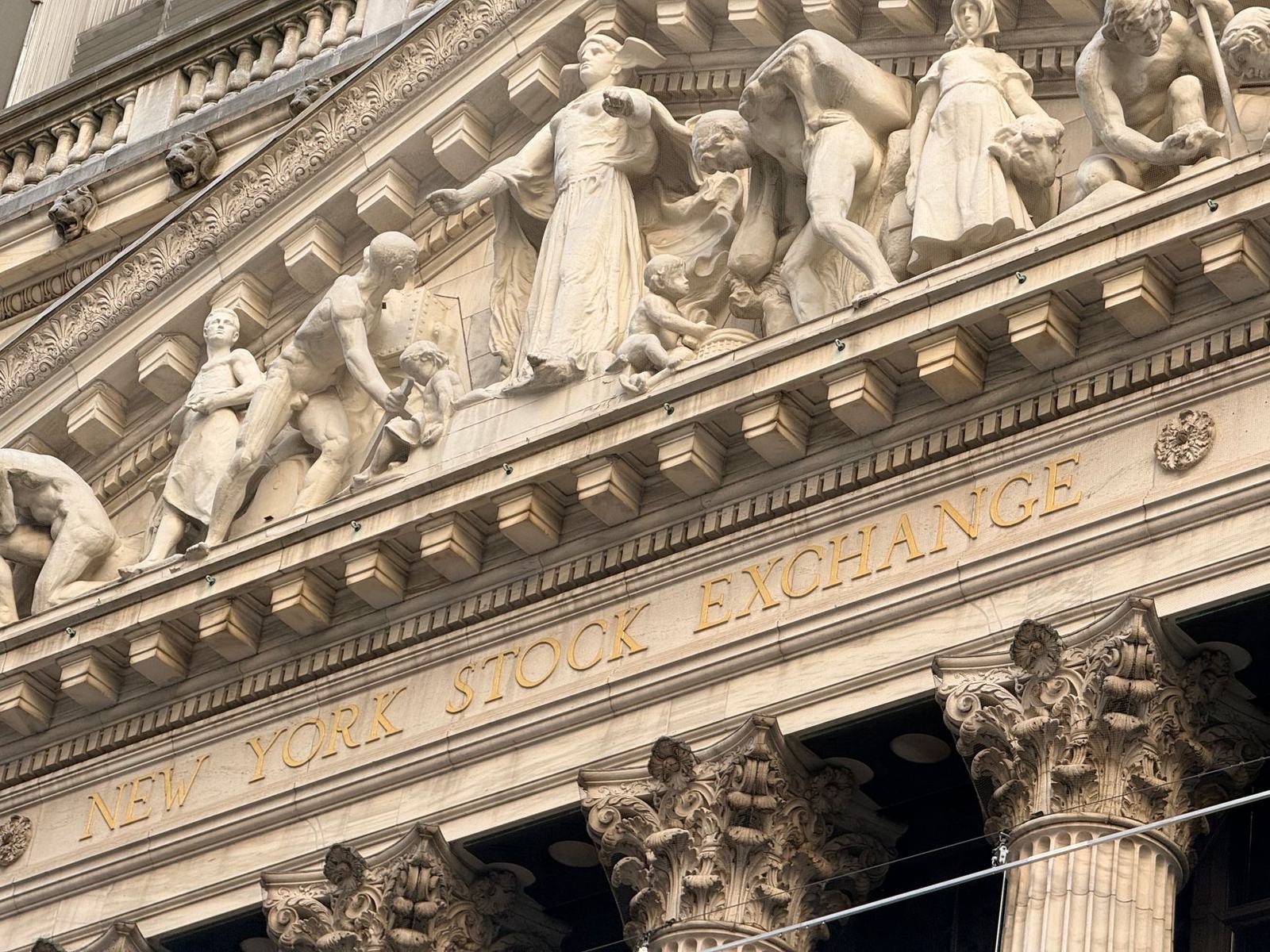
- Bitwise is shutting its spot Dogecoin ETF, ticker BWOW, with trading ending after 14 October, less than a year after it listed on the NYSE.
- The fund held around $725,870 on 7 October and traded $51,480 across the whole of September, according to SoSoValue data cited by The Block.
- Bitwise’s chief executive puts the failure down to a gap between people who buy ETFs and people who use crypto apps. That is his reading of it, not a measured finding.
A spot ETF was meant to be the thing that opened Dogecoin up to ordinary brokerage money. The fund that actually did it is closing after eleven months with less in it than the price of a London flat, and its issuer has now explained why.
Every time a regulator signs off a new crypto fund, the coverage treats it as proof that fresh money is on the way. Here is the whole experiment run to completion: the approval happened, the fund listed on a major exchange, and almost nobody bought it. That is worth remembering the next time an approval headline is written as though it were a buy signal.
A fund almost nobody used
BWOW, launched by Bitwise in November 2025, was one of the first US funds to hold Dogecoin directly rather than through futures or a trust structure. Buying a share of it meant owning a slice of a pot of real DOGE through a normal investment account, with no exchange signup and no wallet.
The numbers it managed in that time are small enough to be worth reading twice. Total assets of roughly $725,870 as of 7 October, and $51,480 of trading volume for the entire month of September. Those figures come from SoSoValue via The Block, and we have not checked them against the provider’s own dashboard.
For comparison, the US spot bitcoin funds that launched in January 2024 were handling billions of dollars of trading in their opening days. BWOW’s monthly volume would not have covered a single minute of that. Even allowing that Dogecoin is a far smaller asset, the gap is not a matter of scale. It is the difference between a product people wanted and one they ignored.
What Bitwise says went wrong
Chief executive Hunter Horsley was asked about the closure in an interview with The Block at the Digital Asset Summit in Asia. He was not dismissive of the coin itself.
“I like Dogecoin, I own Dogecoin,” he said. “I think it’s authentic to what it is; it’s a useless , at least historically, but it stands for something, and I think that’s a reasonable asset, but it went nowhere as an ETF.”
His explanation is that there is a “delta”, a gap, between the audience that buys spot ETFs and the audience that uses crypto brokerage apps. The people who trade on their phone were never going to go through a fund to do it, and the people who use funds were not interested in the asset. “The users of ETFs just didn’t want to put money into Dogecoin, but that may change over time,” he said.
That reading is plausible and it is also the most flattering one available to the firm, because it locates the problem in the market rather than in the product. Horsley explicitly rejected the idea that Bitwise aimed at the wrong audience. He runs a company whose business is launching these funds, so his account of why one failed is an interested party’s account, which does not make it wrong.
He moved fairly quickly to the funds that are working. Bitwise’s Solana staking ETF holds $1.3 billion in net assets, by his own figure in the interview, and the firm launched a spot NEAR fund on 29 September. Public filings show two further applications this year, for an AI Cyber Defense ETF in August and an AI Bond ETF in September. Both are filings, not launches.
Approval is not demand
The belief that an ETF approval guarantees inflows comes from one example: bitcoin, where years of rejected applications built up genuine institutional appetite that had nowhere to go. When the funds finally arrived, the queue was already formed.
Nothing about that transfers automatically to the next coin. A fund is a container. It makes an asset easier to buy for people who were already inclined to buy it, and it does nothing at all for an asset nobody in that particular channel wants. Ether’s funds proved the first half of the point at a much smaller scale than bitcoin’s. Dogecoin’s proved the second half.
For a UK reader, the practical effect is mostly indirect. These are US-listed funds, and UK retail access to crypto ETPs only opened up this year, so the main thing you get from BWOW is a cleaner read on what the approval headlines are and are not telling you.
What to watch
Whether other single-asset funds follow. A long list of and memecoin ETFs reached the market over the past year on the same assumption BWOW was built on, and BWOW is the first to run out of road in public. A second and third closure would say something about the whole wave rather than one fund.
And whether Bitwise’s AI filings turn into listed products. Horsley talked up a future where AI agents transact through “not a bank teller standing behind a pane of glass, but a available in milliseconds”. That is a pitch about what might happen. The Dogecoin fund is what did.